
6 Myths: Starting Solid Foods
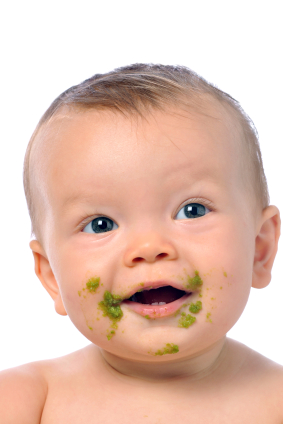
At the 6-month check up, nearly all of my patient families want to talk about starting their babies on solid food. The conversations usually start like this...
“I go get all of Gerber stage 1 foods and then do all the greens, then the yellows, then the fruit. After she eats all of the stage 1 foods, then she goes on to stage 2, right?”
Or this...
“I have gone to the farmer’s market and bought all organic produce to make his baby food. I am following the [insert name here] recipe book that I got from a friend, and their baby is such a great eater. Do you think bulgar wheat or quinoa is better?”
Or this...
“I have already given some rice porridge with scrambled egg, and some broth with root vegetables. Can I start tofu now?”
As these real-life conversations demonstrate, the plan and expectation for introducing solid food to babies is different for every family. The food items that parents first feed children is influenced more by culture and generational upbringing, than by any scientific research or product marketing plan.
And, that’s OK! In fact, it’s wonderfully liberating news for parents who are really stressed out about first foods.
So, what are my general guidelines when it comes to starting infants on solid foods?
- I encourage the families of healthy, normally-developing children* to start solids near or after 6 months of age.
- I want parents to give babies a great variety of real food, in a safe way.
- I think of pureed foods as practice and play to develop the skill of eating; nutrition is still from breast milk or formula.
- I try to challenge my families to think outside of the Gerber-defined box and give babies interesting tastes, but no raw honey until after the first birthday.
That’s it. Go. Eat.
Wait a minute.... There has to be more. What about the rule about veggies first? Babies can’t have dairy, right? What about spicy stuff? They aren’t supposed to have strawberries or oranges, either!? My mom wanted to give her yogurt, and I told her “no.” Please don’t tell me she is right!?! And you have said nothing about rice cereal.
OK, so maybe there is a little bit more. But, likely not what you expect. When continuing the food conversation with families, some common myths creep to the surface.
It’s tIme to bust some common “starting solid food myths” ... for good!
Myth #1:Rice cereal must be first.
Rice cereal has traditionally been the first food for babies in the United States for generations. But, why rice cereal? It is convenient - easy to obtain and easy to feed. Baby cereal is also fortified with iron and other nutrients. This promoted as a benefit for those infants who need some supplemental vitamins and minerals in their diet. Click herefor information about iron recommendations for infants.
Giving rice cereal as a first food is under active debate. Specifically, Dr. Alan Greene is noted for starting a “White Out Now” movement.He encourages families to feed infants whole, natural first foods instead of rice cereal. Dr. Greene discusses how the food industry has marketed and advertised to parents so heavily, the industry has created doubts in our minds regarding what is best to feed babies. We, as parents, start to believe that the healthy foods that we eat are not “good enough” for our babies.
Dr. Greene’s is also concerned that rice cereal primes infants to crave only carbohydrate-rich foods, contributing to the obesity epidemic. Other physicians have debated his theory,but I think his general concern for the quality of first foods is worth notice.
For the first few months of eating solids, an infant’s nutrition is still based upon the healthy calories given by breast milk and formula. That allows pureed foods of all forms to be first foods, as they have for centuries.
Expand beyond the rice cereal “default”. What about some pureed red meat as a first food? What about whole grain cereal, oatmeal, or a pureed fruit or veggie? Maybe, something you have in the fridge? (see #2)
Myth #2: Making baby food is hard (A.K.A. I don’t have time to make baby food.)
I hear this a lot; mainly from parents whose only experience with baby food making is observing a few moms with fancy baby-food makers, complicated recipe books, and bags of locally-sourced organic ingredients. This “all-in” approach to pureed food making can seem overwhelming and unreachable.
But, let me offer a suggestion...
In my clinical experience and personal experience, the earlier you get your baby eating the healthy meals that you provide your family (in a safe, modified way), the better they will eat as toddlers. So, I challenge all my families to try to make some first food... simply.
I do not talk about making baby food with the claims that it is of greater superiority to jarred baby food. There are some great commercial baby foods on the shelves today. But, babies have survived for many years before infant food was available in aisle 4B of the grocery store; and I think only offering what a food company can put in a jar is actually quite limiting to a baby’s early taste experiences.
To make baby food, you need soft foods (fruits, veggies, whole grains, meats), a little water, and a machine to puree. The machine could be a food mill, a blender/food processor, or a strong arm with a fork. Voila! Simple as that. I bet there is something in your kitchen right now that you could whip up for baby. Last night’s grilled chicken breast? Leftover green beans? Melon? Avocado?
As a working parent, I certainly bought prepared baby food. But, I made a lot of food for my infant, too. For me, it was easy, cheap, quick, and just part of the routine.
So, I challenge you to try to make some of your baby’s first tastes. Experiment and have fun! Decrease your family’s food cost, decrease shipping and packaging waste, and increase the palatable options for your baby to try.
Myth #3: Starting solids will help my baby sleep through the night.
Nope. It doesn’t.
Starting foods too early may actually have some negative consequence including obesity, food allergy, and decreased sleep!
Yikes!
Currently, it is recommended that first foods should be started around 6 months of age. This age is preferred for both the developmental ability of an infant to take food off a spoon, in addition to decreasing the risk of food-associated allergies and obesity.
Eating solid foods is a developmental skill, not a way to “fill baby up” to sleep longer. So don’t let this myth determine when you start solid food.
Myth #4: Greens, then yellows, then oranges.
There is no evidence to suggest that if you offer baby fruits first, she will never eat veggies. Regardless of what order food is introduced, kids (and adults!) will always prefer sweeter-tasting food items. Offer your baby foods of all colors of the rainbow, in no specific order.
Myth #5: My baby can’t really have the food that I am eating.
I think the origin of this myth/concern stems from parents knowing the kind of diet they have. Feeding our children is often an examination of what we, as parents, feed ourselves.
If a parent’s diet consists of fast food, takeout, and late-night snacks then the thought of feeding baby exactly what you eat is ridiculous. Agreed. But, if you are not willing to feed what you eat to your baby, maybe it’s time to think about the nutrition and healthy eating choices for the entire family.
If a family eats a healthy, well-rounded diet then the concept of offering baby what you eat is not such a scary idea. Make healthy, positive food choices, include your baby, and see the long-term benefits for the whole family.
Myth #6: Oh, no.. baby can’t have that.
Currently, for healthy babies who are not in a family with significant food intolerance and allergies, the only thing babies under the age of 12 months cannot have is raw honey. Honey may contain harmful botulism spores that could make small babies very ill.
That’s it.
The research regarding introducing solid foods is actively changing. This means the foods that have been traditionally restricted until later in toddlerhood (eggs, shellfish, peanut butter) are no longer on the “Do Not Have” list. In fact, somerecent data suggeststhat delaying the introduction of high-allergy foods (shell fish, nuts, eggs) actually increases the risk of developing a food allergy. Other studiesdo not show an increase in allergic disease by starting allergenic foods early. In addition, adding dairy sources (cheeses, yogurt) and animal proteins (meat, chicken, pork, fish) can be added at any time.
Expand the box. Think about your own diet, and what you want your kids to eat. What is acceptable for your family, your culture? Don’t let Gerber or Earth’s Best or [insert baby food company here] make those definitions for you.
Your baby just might surprise you... mine certainly did. Within a very short period of time, my 8-month old son’s favorite food was my husband’s recipe for chili (pureed) - extra spicy!
Have fun!